
ISBTM2025, a call for sustainable and humane innovation in corporate travel and events
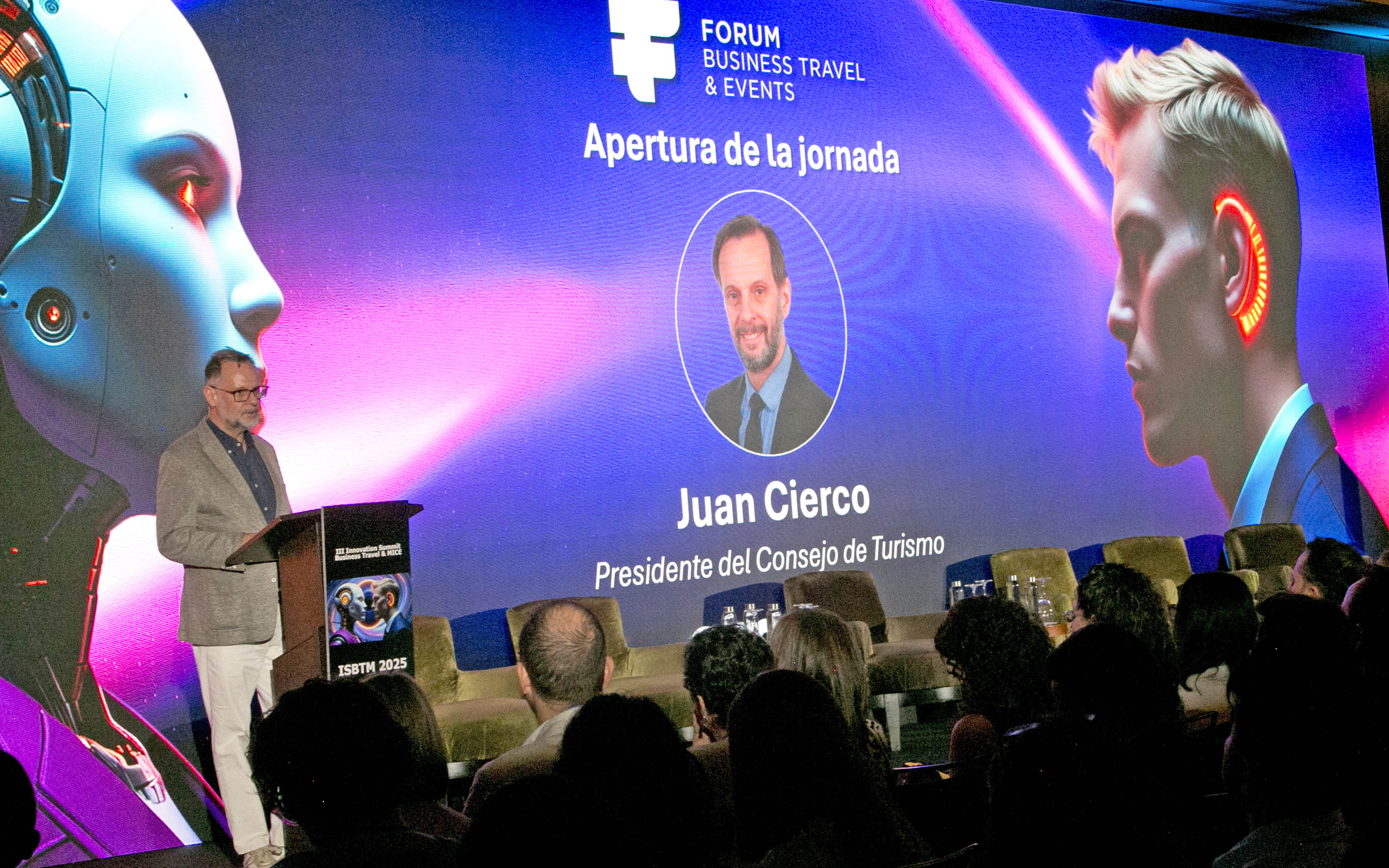
The III Innovation Summit Business Travel & MICE (ISBTM2025), held on July 2 and 3 at the Eurostars Madrid Tower, brought together nearly 400 professionals from the business travel and corporate events sector, consolidating its position as the benchmark forum in Spain. Organized by Forum Business Travel & Events, the meeting has served as a platform to analyze the great challenges and opportunities of a sector that already represents 20% of the national tourism and that, according to the president of the Tourism Council of the CEOE, Juan Cierco, "moves much more than people: it moves investments, ideas and cooperation.
The congress has allowed to share experiences and solutions around four main axes: intelligent digitization, comprehensive sustainability, the transformation of MICE and the human factor as a driver of competitiveness. Over the course of 15 sessions, attendees highlighted the need to develop interoperable booking systems and travel services, the balanced application of artificial intelligence, the strengthening of public-private collaboration and a social approach that transcends mere CO2 emissions offsetting.
"Taking care of business travel is taking care of the competitiveness of companies”
The opening was in charge of Juan Cierco, president of the Tourism Council of the CEOE and Corporate Director of Iberia, who insisted on the strategic importance of Business Travel: "It is a segment that represents 20% of Tourism. Taking care of the business travel is to take care of the competitiveness of the companies and to present internationally a connected Spain. He also warned of the urgency of promoting biofuels and of "taking advantage of the good times to undertake the necessary reforms that look to the future of the sector", in a context of rising prices and environmental pressure.
Technology with purpose: less noise, more adoption
The first round table, "The hidden face of travel: intelligent solutions in corporate travel", highlighted the role of the travel manager and technology as a means to fulfill travel policies and improve the traveler's experience. Carlos Martín (American Express) and Ana Soledad Rincón (Gesovi) agreed that "technology is a means, not an end" and that solutions that offer greater flexibility and personalization are the ones that work best.
Marta Villar (Meliá Hotels International) reminded that "the more rewarding the traveler's experience, the easier it will be to implement and comply with the company's travel policy;The more rewarding the traveler experience, the easier it will be to implement and comply with the company's travel policy, while Esther Segu (Taurus Group) called for "more active listening between suppliers and customers to accelerate the automation of technological implementations.
Innovation that humanizes digitization
Under the slogan "Breaking the mold: the innovation that changes the future of corporate travel", representatives from Apartool, Joinup and TravelPerk celebrated that digitization must be accompanied by a "clear purpose": "It is not a question of burdening with applications lacking in usefulness," said Elena Peyr (Joinup), while Adri Izard (TravelPerk) stressed that "the key is for technology to make as little noise as possible, to make the traveler's life easier without being noticed. Claudia Coelho (Super Bock Group) added that "it is essential to know the reliability and origin of the data in order to make strategic decisions.
Artificial intelligence: from pilot to regular tool
In the interview on OBT implementation and artificial intelligence, Anna Ribera (CaixaBank) revealed that the internal adoption of Cytric by Amadeus has reached 93% among its 12,500 travel employees, as a result of the adoption of Cytric by Amadeus.500 traveling employees, as a result of the "strong management involvement and a solid training plan". Jesús Ángel Cervantes (Amadeus Cytric) advancedó that they are already developing “pilot programs with AI applied to the tool, capable of anticipating needs and offering personalized recommendations”.
ESG Mobility: beyond CO2 offsetting
The panel discussion "Mobility with impact: how ESG redefines the corporate journey" focused on the social and governance dimensions of sustainability. Leticia Alcalaacute; (Lufthansa Group) celebrated that "CO2 offset products are increasingly in demand", but warned that "being sustainable is not cheaper, you have to convince the customer by betting on transparency and rigorous measurement". Ignacio González (Consultia Business Travel) highlighted the need to homogenize carbon footprint data sources, while Laia Martín (Ferrer) recalled the importance of the "duty of care", or duty to protect the traveler by the company, and equal opportunities for employees.
Alternative accommodation and the new corporate traveler
In a guide to the hotel sector and alternative accommodation, Noel Granados (Eurostars Hotel Company) and Óscar García (Forum Business Travel & Events) argued that “staff is key in tourism, and active listening and transparency will strengthen” the sector. For his part, Marian Muro (Apartur) warned ó during an interview with Natalia Ros (Forum Business Travel & Events) that “Barcelona could not host business tourism if the tourist apartments í sticos are eliminated, putting at risk its global competitiveness ”.
The MICE: resilience, diversification and real data
Luis Gandiaga, president of Foro MICE, opened the July 3 conference by stressing that “meetings, events and incentive tourism is not about filling rooms, but about generating business and development”. According to estimates of this employers' association, the direct economic impact of the activity reaches 20,000 million euros, with an indirect impact of 40,000 million. Gandiaga claimed “ “ more MICE community and training ó n before the movements of concentration ó n coming ”.
In the block on “Events in the age of impact: Inspire or Disappear”, professionals from Sebastián Seguí, of Minor Hotels, and Amir López, of Meetmaps, concluded that future events will be “more “smaller in number”;smaller in number, with greater relevance and a hybrid character, and that “technology”must serve people, without stealing the spotlight from the sensory experience”.
For her part, Judit Navalón, of Eurofragance, stressed that “the event has to be a strategic tool that adds value, with experiences that last, more sensitive and more premium”.
Reinventing the MICE model
The table “The traditional MICE model isá broken. Who&quacute;n reinvents it” highlighted a tense but fértil dialéctic among participants: while some argued that “the traditional model still works —television or big media— despite the impact of the Internet”, as vehemently defended Mariano Rodríguez, president of Agencias de Agencias de Eventos Españolas Asociadas (AEVEA), other members of the table qualified that “it is a model in transformation after the effects of the pandemic”, besides concluding that “the sector currently enjoys very good health thanks to its resilience and its ability to adapt”.
Competences and soft skills for success
The practical training came with workshops such as “Show cooking. Cooking an event”, where Eva Bartolomé (Nutreco) tracedó the planning phases and warnedó that “ 65% of the problems can be anticipated and 89% of the é success depends on the ability to adaptórdquo;. The soft skills session "When the rice is burnt" shared real experiences of event planners from companies such as Teva, Logicalis, Telefonica, Teldat, Hydafacial or Molins, on incidents resolved in corporate events, highlighting the value of improvisation and teamwork.
Authentic sustainability and emotional power
Finally, the round table “Legacy or posturing in destinations: sustainability without makeup”, focused on the need to move from marketing to facts. Javier Peña, director of the Burgos Convention Bureau, claimed the role of medium-sized destinations to implement "real and verifiable measures", beyond the big headlines; Julia Álvarez de Toledo, from Turismo y Planificación Costa del Sol, unpacked its local certification program and carbon footprint calculator for travelers; and Angeles Ballesta, of the Murcia Convention Bureau, warned of regulatory and budgetary barriers, stressing the urgency of public-private collaboration.