
How the crisis has impacted customer confidence in hotels
With the de-escalation in its final stretch, Panoram Hotel Management has presented an analysis conducted during the months of confinement on the state of trust, needs and expectations regarding the relationship between hotel and guest. The majority of guests value the continuation of the usual services, such as breakfast and activities in common areas, but with more security guarantees.
The results of the survey show that Spaniards trust in the figure of the hotel, which they consider as “safe space”. In terms of willingness to travel, 66% of respondents believe that it will remain the same or decrease slightly, a trend that is reflected in almost all the different age groups. Among those aged 26 to 35, 37.1% will travelá as before, 25.7% will travelá but letá some time go by, and only 5.1% will travelá the essential.
The youngest, for their part, also want to continue traveling. 32.6% of people between 18 and 25 years old will travel the same as before, 26.2% will do so, but with a time margin, and 9.2% will travel only as much as necessary. These figures are very similar to the previous ones among middle-aged people, between 36 and 50 years old.
The willingness to travel in these circumstances also affects the way of managing reservations and cancellations by the population. The analysis shows that the younger the age, the less flexibility to enjoy the experience later in life. For the youngest, in the event of not being able to finally enjoy a reservation, the option chosen is the future discount (58.9%). On the other hand, among those over 50, the option of a refundable reservation is gaining more strength, an option chosen by 55.9% of the people surveyed.
SECURITY
The analysis conducted by Panoram Hotel Management shows that consumers still expect the same services from a hotel, but they do need to feel that they are adapted to the current context.
The experience and now also the feeling of safety has to start from the entrance to the hotel. This was stated by 75.5% of those surveyed, who opted for the option of transparent screens to see the receptionists' faces, which would give them the necessary sense of security, but without sacrificing proximity and personalized attention.
In this sense, the common areas
are the ones that arouse the least confidence among consumers. Forty-one percent of respondents believe that the bar, restaurant or gym are the most critical areas of the hotel, ahead of the room (29.4%), dining room (18.7%) and reception (11.0%).
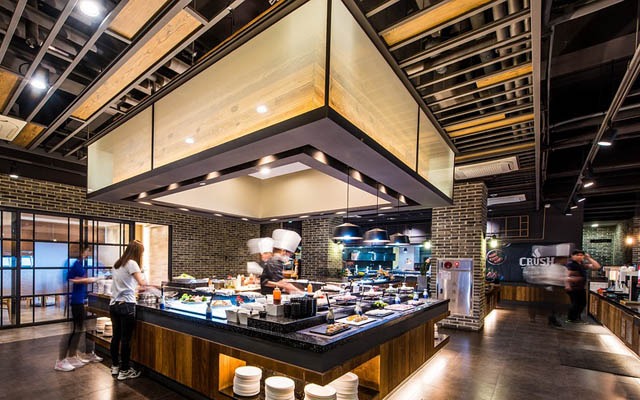
For its part, breakfast remains an important part of the stay for the majority, although they agree that the buffet needs to be adapted. On average, only 5.7% of those surveyed said they would not go down for breakfast. For 62.2%, it would depend on the hotel's hygiene measures, and 32% are clear that they do.
By age, the survey results show that those over 50 years old are the most likely to go down for breakfast, with 38.4%. Regarding the type of breakfast, those over 50 years old are the ones who, with 53.6% prefer buffet, provided that there are adequate hygienic and sanitary measures.
The survey also highlights that this situation does not influence other trends in hotel consumption, such as the reduction of packaging;something that can be seen in the fact that, among the possibilities for enjoying the first meal in a hotel, the least popular option is the use of a single-use container to enjoy breakfast, chosen by only 5.9% of those surveyed.
Finally, the survey, with a sample of 2,000 people, points out that customers now value a smarter concept of spaces, especially rooms, with particular emphasis on simplicity and connectivity.