
Health passport pits economists, doctors and legal experts against each other
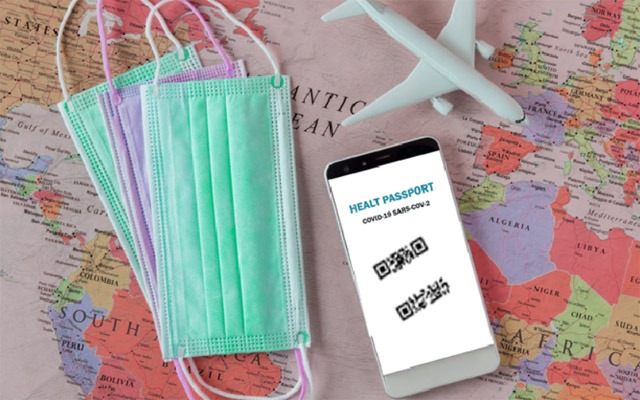
The ePassport is present in all the debates related to covid-19. With vaccination underway and the economy in crisis, there are two clearly opposing positions on this document. Health and legal experts consider it “premature”, but economists see no other way out to revive travel after a blank year.
The European Commission has just presented its proposal for a green digital certificate, a document with a QR code or on paper verifying that the holder has been vaccinated, has passed the disease or has a negative test result. The project could be ready before the summer.
For its part, the WHO calls for equity between countries before vaccination so that there is no discrimination in the rights of citizens, which could translate into freedom of movement. «At the moment it is a mistake because there is no free access to vaccination», assures Oriol Yuguero, collaborating professor of Health Sciences Studies at the Universitat Oberta de Catalunya (UOC).
For her part, collaborating professor at the UOC's Faculty of Law and Political Science, Fabiola Leyton, believes that this is a «premature measure» given the lack of equal access to immunization.
On the other hand, Pablo Díaz, an expert professor in Tourism at the UOC's Faculty of Economics and Business, thinks it is «appropriate» to be able to «give oxígeno» to tourism and all related sectors, and points out that the elderly will be the first to travel after being the population «more punished» by the pandemic.
From the scientific sector, they warn of the health risk because, they say, there is still a lack of data to be verified regarding vaccination. We don't know what role it will play in the possible transmission of the disease," Yuguero points out, to which Leyton adds that it is also not known exactly "how long immunization lasts.
According to the latter, the document could offer a false sense of security to the bearer. Both are of the opinion that it is a discriminatory measure. «It generates first and second citizens,», declares the health expert.
Díaz is aware of this possible effect and that there is «uncertainty» with respect to the vaccine protection periods, but considers that, if mobility is carried out in a «adequate manner, with sufficient restrictions on local assembly and mobility of the destinations to which they travel», there need not be any spikes in infections with the slightest opening of tourism.
And, on the contrary, it offers the advantage of being able to give oxygen to a sector in intensive care and with a great weight in the Spanish economy. It is a clearly economic measure, designed to save as much as possible to the sector, and social, for the right to travel or move», comments.
OTHER ‘PASSPORTS’
¿Only the coronavirus requires a document certifying a vaccine to travel? No, but experts stress that, for other diseases, from which citizens are immunized when traveling to some countries, vaccines are available.
«Access to the covid-19 vaccine is not universal», reminds the health teacher, who explains that, for example, for yellow fever «we can access a center to receive the vaccine dose».
The legal expert retorts that the situation is «very different» also because of the type of ailments. «International vaccine certificates exist as a measure to ensure that a person is immunized against a disease that does not exist in his or her country of origin, but in the case of covid-19 the disease has reached all countries.
Yuguero proposes that only emergency travel should be allowed and that a negative PCR test should be required, as in the past. «We should restrict them until we get higher vaccination rates,», he proposes.