
European travel agencies criticize the NDC implementation model
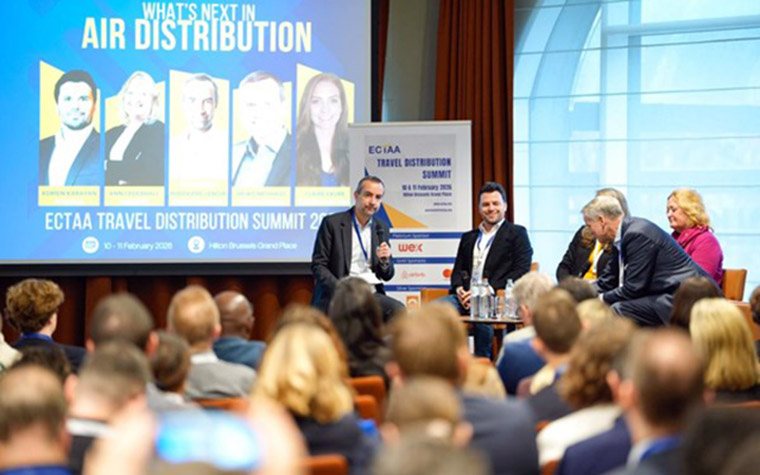
The Travel Distribution Summit 2026 took place on February 10 and 11 at the Hilton Brussels Grand Place, attended by more than 150 executives from agencies, tour operators, airlines, and technology providers to analyze the future of tourism distribution in Europe. Although the agenda included artificial intelligence, regulation, and new market trends, the real focus of the meeting was the debate surrounding New Distribution Capability (NDC), its evolution towards retail management models, and the differences in the application of the standard between companies, which hinder integration into the systems of agencies and large distributors.
During the forum, participants acknowledged that it has enabled airlines to gain the ability to build more personalized offers and better control their commercial content. However, they also pointed out that its practical implementation remains complex. The lack of uniform standardization in APIs and differences in the application of the standard among companies make integration into agency and large distributor systems difficult.
The debate made it clear that the issue is no longer solely technical. During one of the central sessions, it was emphasized that the sector must move beyond the traditional logic based exclusively on ticket issuance. "We have to move from transaction management to a world of retail management, where the money is for both airlines and travel services," said the experts on the panel dedicated to the modernization of air distribution.
This statement sums up the paradigm shift that was discussed in Brussels: evolving towards a model based on offers & orders, where the airline product is configured as a dynamic and flexible offer, similar to digital retail.
This approach involves transforming not only the way the offer is presented to the customer, but also the technological architecture that underpins it. Back-office, reconciliation, reporting, and expense control systems?especially relevant for corporate travel? will need to adapt to a structure that is less based on traditional PNR and more oriented towards complete service orders.
In this context, ECTAA Secretary General Eric Drésin argued that modernization should not exclude intermediaries and stressed that "technology will accelerate change and everyone will have to adapt, but it will also create new opportunities for all stakeholders, including travel intermediaries." His speech reinforced the idea that the success of NDC and the retail model will depend on collaboration between airlines, agencies, GDSs, and technology providers.