
Dynamic fares gaining ground in corporate travel negotiations
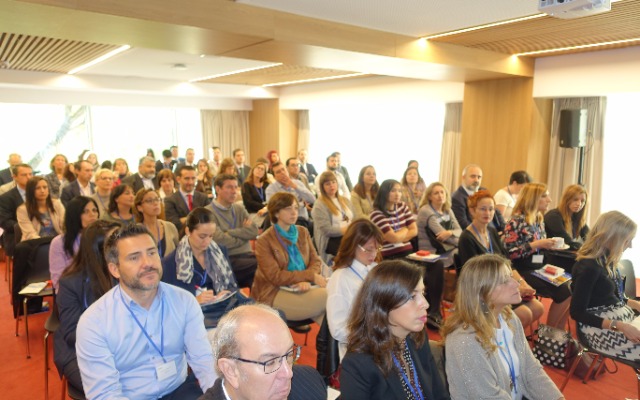
Despite the fact that most companies maintain negotiated rates with their main suppliers, the trend for 2018 is a scenario in which fixed prices are increasingly giving way to dynamic prices, in line with advanced revenue management techniques. This was confirmed by the experts and travel managers gathered by Forum Business Travel at the October conference held in Madrid and Barcelona.
The revenue management, i.e., the dynamic pricing system used by travel suppliers, especially airlines and hotel chains, to get the most out of their product, is gradually gaining ground in corporate travel, traditionally based on fixed rates negotiated per room or per flight. A reality that will become more evident in 2018, according to Forum Business Travel.
As indicated Marta Villar, from the Sales Department of Meliá Hotels International, “dynamic rates guarantee greater inventory and availability, avoid currency fluctuations and separate the figure of the travel manager from the pure purchasing function”.
In the world of Business Travel it is very common to sign LRA (Last Room Available) contracts, with prices guaranteed until the last room available, but in his opinion they should be demystified, because they are not always necessary. The extra cost of this security sometimes does not pay off; it depends on the number of overnight stays and the hotels included in the agreement, according to Esteve Tortosa, director of Corporate Sales Eastern Spain for the same chain.
Susana Molina, regional sales director at NH Hotel Group, is clear: “there is less and less talk of price and more talk of discount in negotiations in 2018”. This trend reinforces the idea that negotiated fixed prices are giving way to the application of a percentage saving on the best available rate at any given time, which in business travel is known as BAR (Best Available Rate). Even the discount itself starts to be variable depending on occupancy.
With this system, long conversations between the supplier and the traveling company are avoided, destination by destination. It is also recommended for global agreements and to promote periods of more than one year, which is the standard nowadays. It simplifies negotiation and guarantees the best price for all types of rooms," explains Molina. His compañera Yolanda Fernández, opens eyes on the so-called Open Corporate Rate, the último that has come to the negotiations of corporate travel, in which the discount on the rate is variable depending on demand.
Revenue management is already being applied by airlines prior to hotel chains. The question is to find a system that gives companies truly global coverage. Alliances such as Sky Team, which brings together 20 airlines, are already working in this direction with proposals such as the Corporate Agreements, which allow companies to sign a single contract with several companies, although prices and discounts are fixed bilaterally with each of them. It is subject to a minimum number of bookings and airlines involved, but it is a possibility that “facilitates and simplifies the negotiation”, as recalls David de Pablos, director of Sales for Europe at Sky Team.
With regard to urban mobility, platforms with a vertiginous market penetration such as Cabify seem more inclined, instead, towards closed prices, a strategy to guarantee companies that they will not encounter unpleasant surprises when they receive the bill. Mytaxi, which makes a prior estimate of the cost of each ride, has just launched a discount campaign for its corporate clients based on their consumption.
In any case, some of Forum Business Travel's partner travel managers are wary of dynamic pricing. For the expert Agustín Casado, “they create problems when preparing budgets, precisely because of their variable nature”. Richard Wolf, Travel Management consultant, warns that there can be a "trap" in the unbundling of rates "when you find that the extras cost more than the base price". In addition to this idea, Marta Luque, Travel Manager at DABA-Nesspreso, believes that one of the keys is to "know very well the conditions of the negotiated rates in terms of the possibility of changes and cancellations". Begogogo Alcaya, travel manager at GFT IT Consulting, believes that "we must always be vigilant to ensure that suppliers apply the prices as agreed".