
Companies begin to link travel and meetings management
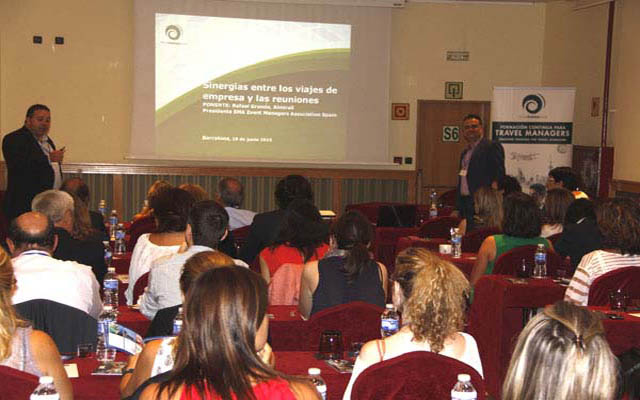
The search for savings and synergies is driving many companies to coordinate management between travel and meetings and events, despite the fact that their guidelines often depend on different departments. This trend is linked to the policy of concentrating suppliers to obtain better deals, according to the conclusions of the Forum Business Travel conference in Madrid and Barcelona.
So much so, that in some companies the corporate travel manager is taking on tasks related to the organization of conventions and internal meetings, including events, given their privileged knowledge of the market and suppliers of transportation, accommodation and other services associated with the mobility needs of companies.
Although the management of both facets may be coordinated in some way, the truth is that it is more common to use different travel agencies. According to Margarita Algaba, head of the Delegate Service Department at Laboratorios Rovi, "the creativity and flexibility that the organization of meetings and events sometimes requires is different from the effectiveness of the standardized processes of ordinary business travel."
Another concern of travel managers and meeting planners is calculating the return on investment involved in travel and events. In the former case, measurement is relatively simpler. When you invest in travel, it is usually to open business. If you get it, there is the return. With events, on the other hand, it is much more complicated to quantify," Algaba explains. Other factors come into play at conventions and events, such as brand image, loyalty, satisfaction, etc.
For Rafael Grande, president of the Event Managers Association in Spain (EMA) and head of Global Events at Almirall, “the key is to know where the travel manager's management ends and where the meeting planner's begins and, above all, to decide what we want to measure according to the objectives set by the company”.
The big challenge to take advantage of the coordinated management of both areas "is to implement a common supplier policy," says Alberto Mestre, director of the Meetings & Events area at American Express Global Business Travel. In the expert's opinion, “this strategy can obtain interesting savings by concentrating purchasing, but care must also be taken, because suppliers that are efficient for some purposes are not so efficient for others”.
As Óscar García, founding partner of Forum Business Travel, “just as companies establish their business travel policy, they should also create purchasing guidelines when it comes to meetings and events. It is the best way for them to optimize their resources."
Under the title "Together, but not mixed up: Synergies between business travel and meetings," Forum Business Travel held its latest travel managers' conference in Madrid and Barcelona on June 16 and 18, respectively, with the attendance of more than 100 travel managers.