
Business travel adapts to new generations of employees
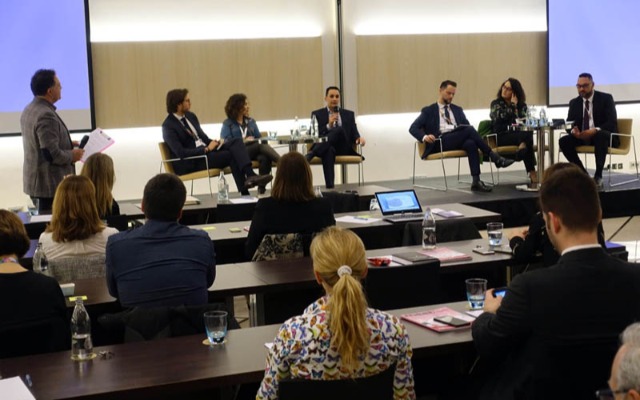
“Adapt or die”. This is the motto of many companies in which millennial travelers are demanding new ways of approaching their trips. In addition, the coexistence of different profiles, from those resistant to change to digital natives, is forcing suppliers to diversify their products and fare structures to cater to different typologies.
What is clear is that technology "is improving processes and that translates into higher quality service, in a more personalized service," says Eduardo Yunta, director of corporate sales at NH Hotel Group. In his opinion, chains are moving towards a "hybrid model" in which automation is combined with a more human service, taking into account the type of each customer. As José Chamorro, director of business development at Meliá Hotels International for central and northern Spain, “H2H [human to human] contact remains fundamental”.
Íñigo de Amo, senior manager of Corporate Sales at Sixt Rent a Car, explains that “young people are looking for other types of benefits, beyond the economic”, within companies. This means that the policy on business travel is an important element in working conditions. That is why they value comfort in their travel and the flexibility to adapt it to the way they travel. The combination of leisure and business (bleisure) is also among the priorities of employees.
Noelia Castro, travel manager at Endesa, is clear that companies "have to motivate their workforces, because it is the best way for travel to be really productive". In his opinion, "we have gone from mistreating the traveler to empowering him", which translates into "more applications to make his life easier when he is away from home, offering opportunities to enjoy the destination as a tourist when he finishes work or being open to new ways of getting around, such as car sharing". In the management of corporate travel, the big challenge "lies in transforming the travel manager into a mobility manager," he adds. Environmental legislation is becoming increasingly restrictive, forcing companies to expand their range of solutions beyond cabs. According to Christian Ley, head of sales at Mytaxi, “we are moving towards an integrated mobility, in which cab, VTC, carpooling and traditional public services coexist with motorcycles or electric scooters”.
In the aviation sector, there are also interesting movements. According to Silvia Magdaleno, a global Business Travel consultant, what is coming to the market are "long-haul low-cost flights, which increase the alternatives, and the segmentation of fares, with an increasing success of the hybrid proposals, which are neither Business nor Economy". In his experience, the key for travel managers is to have the right technology to monitor prices. In any case, the big revolution for passengers is coming through the "fleet renewal, with new aircraft models that are more cost-effective and efficient," as Ismael Rodríz, head of Key Accounts at Air Europa, recalls.
The Forum Business Travel sessions dedicated to industry trends also focused on the evolution of payment methods, where an explosion of products and services is taking place, especially in the field of Fintech. Another solution that is gaining ground is virtual cards, which are more convenient and secure. Although they have not yet reached corporate travelers, it will not be long before they do; in fact, says Jessica Püttmann, marketing director of Diners Club Spain.