
"The pandemic crisis has helped us put the focus on the traveler."
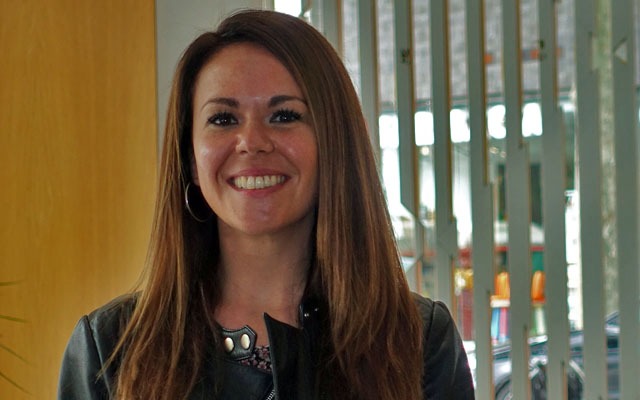
The relaxation of restrictions opens up new challenges for the daily management of corporate travel managers, who have to keep track of more employees on secondment in an international context still marked by enormous uncertainty. Judit Navalón
, Business Travel Coordinator & Event Planner at Eurofragance, shares her experiences."How is your company facing the resumption of travel?
We are carrying out a staged resumption, subject to restrictions and sanitary measures. Since last summer we have traveled around Europe, we have flown between Barcelona and Dubai and we have even made a repatriation from Singapore. We are preparing for Beautyworld Middle East in October. The truth is that we are really looking forward to travel, encouraged by the progress of the IATA Travel Pass and the EU digital covid certificate. It is good that airlines are adhering to these initiatives. We are grateful for the flexibility and adaptability of the suppliers.
What are the criteria you have established for choosing between travel or videoconferencing?
It is a matter of considering whether travel is essential or not. We have bet a lot on technology and we are happy with the possibilities it offers. You have to evaluate in each case.
"How has the pandemic changed the way we travel?
Covid-19 has represented an unprecedented challenge. We have had to adapt very quickly. It has helped us to review all procedures and, as travel managers, to put the focus on the traveler in terms of health, safety and their needs. Suppliers have also served as a source of knowledge and advice. The flexibility of fares, with their new change and cancellation criteria, has helped a lot, with cancellation policies.
Now the duty of care is more in place than ever before. As managers, we have to anticipate risks and maintain a proactive attitude. The evolution of risks must be done in a more analytical way, taking into account not only the destination, but also the duration of the trip, the employee's own disposition, or the need for extra insurance.
How do you approach employee follow-up?
It is important to follow up on the pre, during and post-trip. You have to have reliable sources. For example, Timatic, the IATA service, works very well. The information with the employee must be fluid and bidirectional. Feedback from the traveler is very important, because it provides a lot of information that can be included in the policy. Also if it is necessary to implement emergency protocols, involving not only the travel manager, but also the general management and the Human Resources department. The work becomes more complicated, you have to be trained.
What modifications have been necessary in the authorization processes?
Before, the travel manager did not have so much visibility and now he/she is involved from the very first moment. So is the steering committee. We are all informed of who is traveling, where they are traveling and how they are traveling. In these circumstances it is important that the whole company is aware.
? And when it comes to internal communication?
We have taken advantage of a communication tool we already had to create a section we call ‘World & Mobility News’. Every day we post all the information that comes in. The travelers are up to date, but it also brings value to the employees, so they can see how mobility is going in the world. Apart from that, we also have a part dedicated to covid, as well as recommendations of webinars they can attend. On the other hand, we try to make the trip as easy as possible, with customized reports about your trip, dates, necessary requirements, links to forms, recommendations, addresses to perform PCR at destination, etc.
.