
"When everything is technologically integrated, the event ceases to be a puzzle of suppliers."
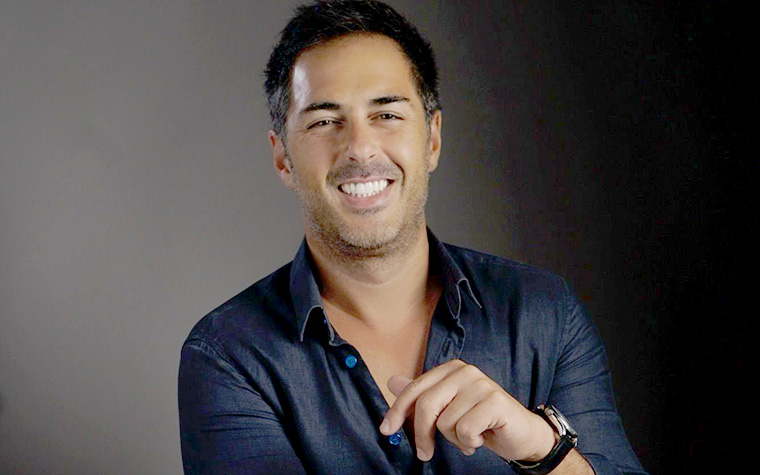
Amir López is Head of International Business EMEA at Meetmaps, a comprehensive platform that covers the entire event cycle, from registration to final metrics. The company works with a clear objective: it is not simply a matter of incorporating technology, but of eliminating friction so that organizers can focus on the essentials and attendees can enjoy a smooth, uninterrupted experience.
What does a corporate event need today that wasn't so critical before?
Today, time and attention are scarce. Attendees have zero tolerance for wasting minutes looking for a QR code, a room, or the right person. And organizers need control and data to justify the return on investment (ROI). The standard is no longer that the event goes well, but that it is easy, fast, and measurable.
Where is this friction really noticeable?
At the entrance. That's where the experience begins. If there are queues, poor coverage, or people searching for the QR code in their email, the event starts off stressful. Access should be as smooth as a good boarding process: arrive, validate, enter, and start with positive energy.
Many people talk about "all-in-one" solutions. What does that mean in practice?
It means that everything is integrated into the same ecosystem: registration, communications, check-in, application, networking, and metrics. For the organizer, this means control from a single screen; for the attendee, it means an experience without jumping between tools. It's not about adding another app, but about preventing the event from becoming fragmented by using multiple disconnected solutions.
How do you ensure that the customer does not depend on your intervention for each step?
A significant effort has been made to ensure that all information is clear and accessible: videos, tutorials, articles, and guides that allow the customer to take the initiative. The goal is for more and more teams to be able to operate autonomously. That doesn't mean there's no support. Assistance is available when needed, but the time spent together is dedicated to optimizing the event, not solving mechanical tasks. Why commit to long-term relationships? Because it is the most cost-effective way to work with quality. Changing solutions for each edition means relearning, reconfiguring, and adapting processes, which generates considerable hidden costs. With a stable relationship, the team learns once, optimizes processes, and each event improves on the previous one. What does this model mean in practice? An annual fee is agreed upon based on the necessary modules, the number of attendees, and the client's needs. This allows events to be organized with continuity and, above all, structures and data to be reused: accessing previous editions, retrieving metrics, duplicating configurations, and leveraging learnings. Value is not lost; it accumulates over time.
So, the customer pays an annual fee, trains the team once, and can apply it to multiple events?
Exactly. An annual fee is set according to the modules and needs, and the system is applied continuously, without starting from scratch each time. In addition to organizing events, a history is built that allows you to consult past data, reuse structures, and improve based on accumulated experience.
After the event, how do you measure whether it has really worked?
With data that transforms feelings into decisions. We analyze what content worked, what dynamics generated the most interaction, and where interest was concentrated. This not only helps justify the investment, but also improves the next edition with evidence, not just intuition.
Where is technology heading in corporate events?
Toward two main areas: real personalization and automation of tedious tasks. Less manual work for the organizer and a more relevant experience for the attendee. The future lies in events being perceived as "tailor-made" and in technology, when it works properly, being barely noticeable.